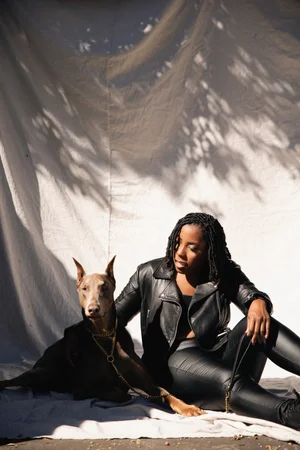
Because your dog doesn't need a seat at the dinner table to be part of the family.
Thanksgiving is almost here! The food is cooking, family is coming over, and somebody's already asking what time we're eating.
Meanwhile, your dog is preparing for what might be the most exciting (and overwhelming) day of the year.
New people. Familiar faces. Delicious smells. Doorbells ringing. Kids running around. And at least one family member who insists on sneaking the dog something from their plate.
Sound familiar?
At Bree's Training Co., I believe the holidays should be enjoyable for everyone, including our four-legged family members. But a successful Thanksgiving with your dog doesn't happen by accident.
A little preparation, structure, and realistic expectations can make all the difference.
Let's talk about how to survive Thanksgiving without turning your home into a doggy free-for-all.
1. Your Dog Doesn't Have to Greet Everybody
Let's start here because somebody needs to hear it.
Your dog does not have to greet every person who walks through your door.
And no, that doesn't make your dog antisocial.
Thanksgiving gatherings can be overwhelming, especially for puppies, anxious dogs, reactive dogs, or dogs who aren't accustomed to having a house full of visitors.
Instead of allowing everyone to crowd your dog at the door, consider:
Having your dog on a leash when guests arrive.
Practicing a designated "place" command away from the entrance.
Allowing your dog to observe visitors before interacting.
Asking guests to ignore your dog until they're calm.
Providing a quiet area where your dog can decompress.
And please, don't force interactions.
If your dog chooses to walk away, let them.
Respecting your dog's boundaries is just as important as teaching them to respect yours.
2. Thanksgiving Dinner Isn't a Doggy Buffet
I know. Those puppy eyes are convincing.
But before you slide a little something under the table, remember that not everything on your Thanksgiving plate is safe for your dog.
Foods to avoid include:
Cooked turkey bones, which can splinter and cause serious injuries.
Turkey skin, gravy, and fatty scraps that may trigger digestive problems or pancreatitis.
Onions, garlic, chives, and foods containing them.
Grapes and raisins, which can cause kidney injury.
Chocolate and desserts containing xylitol (also labeled birch sugar), which is highly toxic to dogs.
Alcohol and unbaked yeast dough.
What about turkey?
A small amount of plain, fully cooked, boneless, skinless turkey can be an occasional treat for many healthy dogs, provided it contains no added seasoning or unsafe ingredients.
But keep portions small and consider your dog's individual dietary needs.
If you're unsure whether something is safe, skip it.
And if your dog eats something potentially toxic, contact your veterinarian or an animal poison control service immediately. Don't wait for symptoms.
3. Stop the Begging Before Dinner Starts
Let's be clear: begging is often a learned behavior.
If your dog has discovered that staring, whining, pawing, or hovering around the dinner table results in food, why wouldn't they keep trying?
Thanksgiving isn't the ideal time to start teaching table manners from scratch.
Instead, begin practicing before the holiday.
Try these exercises:
Teach your dog to settle on a designated bed or mat.
Practice "place" while you prepare and eat meals.
Reward calm behavior away from the table.
Keep food off-limits unless you intentionally offer an appropriate treat.
Ask everyone in the household to follow the same rules.
Consistency matters.
If five people follow the rules but Uncle Ray keeps sneaking turkey under the table, guess who your dog is going to sit beside all evening?
Exactly.
4. Give Your Dog Somewhere to Escape
Not every dog enjoys a crowded house.
And that's okay.
Between the conversations, music, cooking, children, and constant movement, Thanksgiving can become sensory overload.
Create a quiet space where your dog can relax without being disturbed.
Depending on your dog's comfort level, this might include:
Their crate, if they're already comfortable using it.
A separate bedroom.
A familiar dog bed.
A safe enrichment activity.
Soft background noise to help reduce household distractions.
Make sure guests, especially children, understand that this area is off-limits.
Your dog's resting space should never become another place where people insist on interacting with them.
Sometimes the best thing you can do for your dog is give them permission to do absolutely nothing.
5. Kids and Dogs Need Supervision. Always.
Thanksgiving often brings together relatives who don't regularly interact with your dog.
That includes children.
Even a friendly, well-socialized dog can become uncomfortable when children hug, chase, climb on, or repeatedly approach them.
Watch for signs of stress, including:
Lip licking when no food is present.
Yawning outside of normal tiredness.
Turning away or avoiding contact.
A stiff body or freezing.
Showing the whites of the eyes.
Growling or attempting to leave.
These behaviors are communication.
Don't punish your dog for expressing discomfort. Instead, calmly create distance and address the situation.
Never leave young children and dogs together unsupervised, regardless of how well they know each other.
And remember: a dog tolerating an interaction doesn't necessarily mean they're enjoying it.
6. Don't Forget About Doorway Safety
With guests arriving and leaving throughout the day, doors may be opening more frequently than usual.
That creates opportunities for dogs to slip outside unnoticed.
Before Thanksgiving, practice your dog's doorway manners.
Work on waiting at thresholds, responding to recall cues, and moving away from the entrance when asked.
For dogs who are known escape artists, use additional management tools such as baby gates, closed interior doors, or a secure crate.
Make sure your dog's identification tags and microchip contact information are current.
And don't rely on obedience alone to prevent an escape.
Management is part of responsible dog ownership, too.
7. Exercise Before the Festivities Begin
A little physical activity and mental stimulation can go a long way.
Before guests arrive, consider taking your dog on a structured walk, practicing a few obedience exercises, or offering a sniffing activity.
The goal isn't to exhaust your dog.
It's to provide an appropriate outlet for their energy and help them transition into a calmer environment.
Remember that mental stimulation can be just as valuable as physical exercise.
A short training session, scent game, or food puzzle may be exactly what your dog needs.
8. Your Dog Doesn't Need to Be Perfect
Here's something I remind dog owners regularly:
Training is a process.
Your puppy might have an accident. Your adolescent dog might get overly excited. Your reactive dog might need extra distance from visitors.
That doesn't automatically mean your training has failed.
What matters is how you prepare, manage the environment, and respond.
Don't use Thanksgiving as an opportunity to test every skill your dog has ever learned.
Instead, set them up for success.
And if that means your dog spends part of the celebration relaxing in another room, that's perfectly fine.
Inclusion doesn't always mean participation.
A Final Thanksgiving Reminder From Bree's Training Co.
This holiday season, give your dog something more valuable than table scraps.
Give them structure.
Give them consistency.
Give them space when they need it.
And most importantly, give them the opportunity to feel safe and comfortable in their own home.
Whether you're celebrating with a house full of family or enjoying a quiet Thanksgiving, remember that your dog is still learning.
Be patient. Be proactive. And remember to have fun while training!
From Bree's Training Co., wishing you, your family, and your four-legged companions a safe and happy Thanksgiving!
Need Help With Your Dog's Manners?
Whether you're working through jumping, leash pulling, reactivity, puppy behaviors, or household boundaries, Bree's Training Co. offers personalized dog training services in New Orleans and surrounding areas, with virtual coaching options available.
Professional training. Exceptional behavior.
Website: https://breestrainingco.com
Book a Consultation: https://pocketsuite.io/link/breearnaud